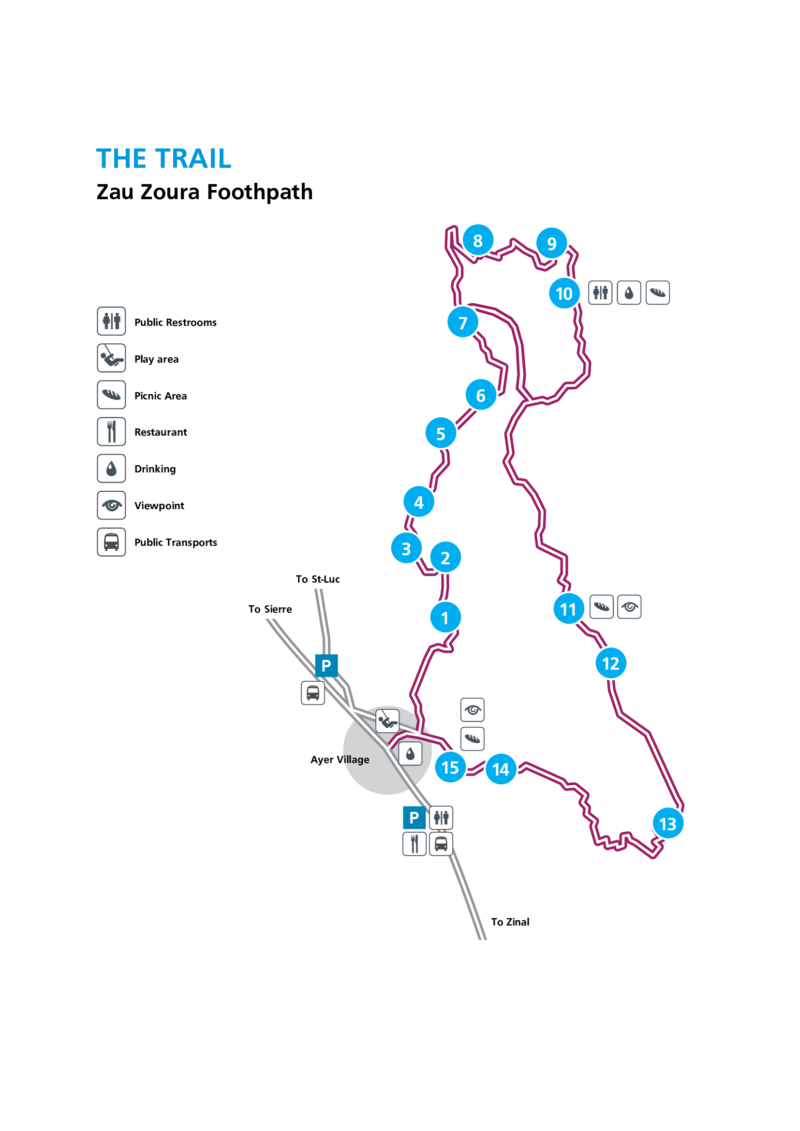
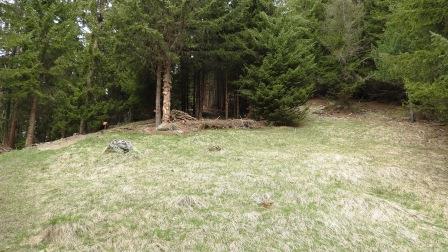
Shall we take a short break during our hike? This small clearing seems like the perfect place to stop especially if you were driving cattle. In fact, it is the location of an old rest area on the way to the “mayens” as high altitude chalets were called.
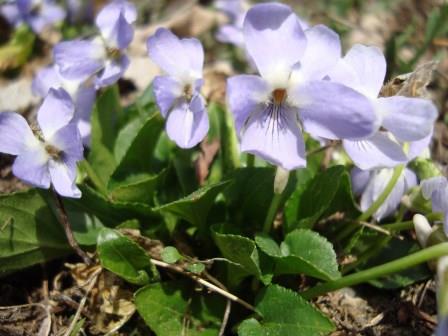
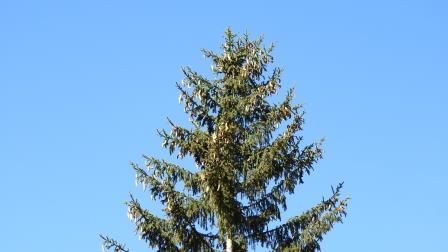
At this elevation, the forest is rife with spruce (Picea abies) which is why it is called “pessière”, (spruce forest). Without man’s inter-vention the forest would soon reclaim the clearing. The proximity of the forest and the fact that it cools the atmosphere make it a perfect environment for the common dog violet (Viola riviniana), or wood violet which abounds in the meadow.
This modest meadow is a particularly diver-sified station: sunny and warm on the inside, but more moist and shaded around the edges. It offers very diverse conditions conducive to an increase in biodiversity which is referred to as “the edge effect”, typical of an ecotone (a transitional area of vegetation between two different ecosystems or plant communities).
Shade tolerant plants and sun lovers
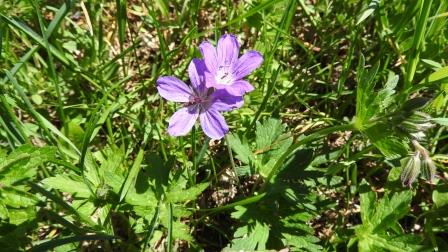
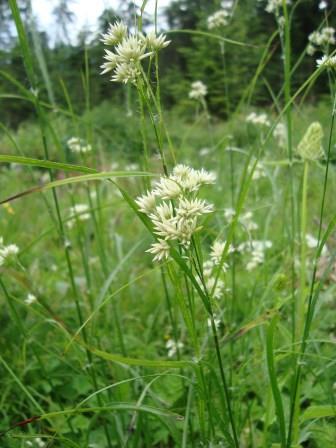
Performing well in partial shade, The wood cranesbill, also called woodland geranium (Geranium sylvaticum) bearing 5 reddish purple petals and a white base can be found at the edge of the forest, as can The snowy woodrush (Luzula nivea), a grass-like perennial recognizable with its tiny white flowers and hairy green leaves.
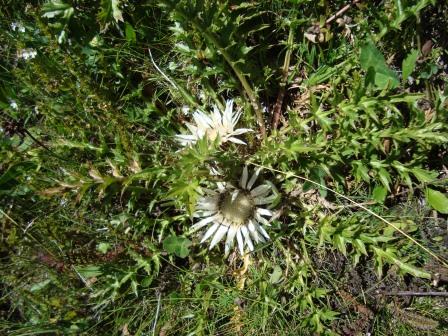
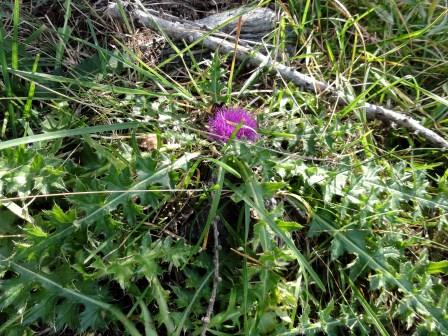
On the other hand the spotted cat’s ear (Hypochaeris maculate) thrives in full sun. It produces yellow flowers somewhat reminiscent of a dandelion but its broad leaves at the bottom of the stem are marked with purplish-black spots. Other sun lovers include prickly thistles, especially the carline thistle (Carlina acaulis). Its leaves can be mistaken for those of the dwarf thistle or stemless thistle (Cirsium acaule), but their flowers are very different: the former’s are white, the latter’s purple. Can you see them?
Evidence of cattle movement
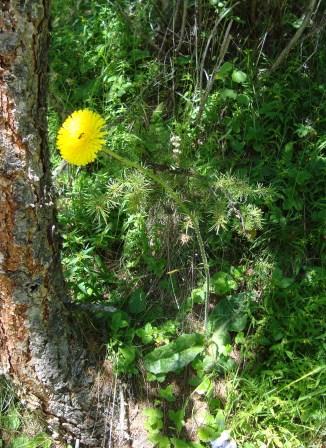
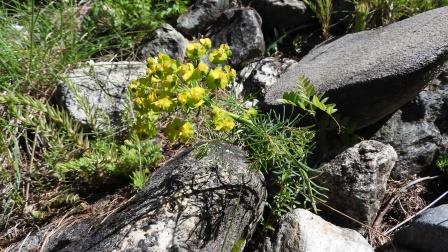
Considering its location this soil should be poor in nutrients because cleared slopes and draining soil cause nutrients to be washed away. Proof is the occurrence of the cypress spurge (Euphorbia cyparissias) that loves lean meadows, sunshine and dry areas. It produc-es yellow and red inflorescences that consist of a pistillate flower, surrounded by several staminate flowers that lack sepals or petal. It bears linear leaves-smaller and watertight- re-sembling those of conifers.
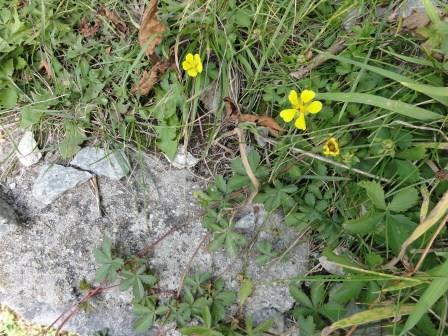
Another plant to be found is the creeping cinquefoil (Potentilla reptans) which grows on nutrient rich soils especially high nitrogen ones and tolerates being a bit trampled! It’s a small creeping plant that bears bright yellow-colored flowers. The cinquefoil’s leaves are borne on long stalks and each individual is divided into five smaller leaflets.
The combined occurrence of a rich soil and plants that bear evidence of trampling only serves to demonstrate that cattle has been through this area and left behind their naturally fertilizing dung.