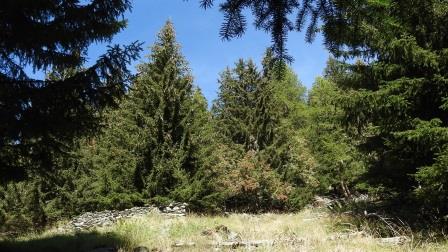
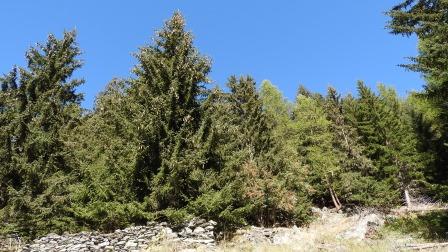
An edge or border is a transition area between forest and grassland.
Text: Céline Vuitton and Mirko D’Inverno, field botanists
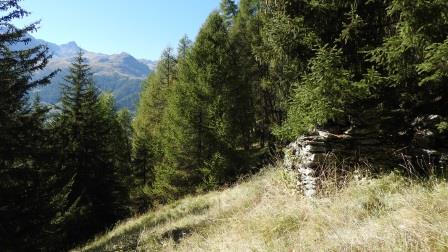
An edge or border is a transition area between forest and grassland. Its flora benefits from a certain amount of sunlight allowing the development of many flowering plants. The cooling effect of shade lengthens the blooming period, which is a boon for pollinators. As this ecosystem is not suitable for mowing or grazing it has become a refuge for wildlife that enjoys its abundance of food and shelter. Within it thrives a very rich fauna.
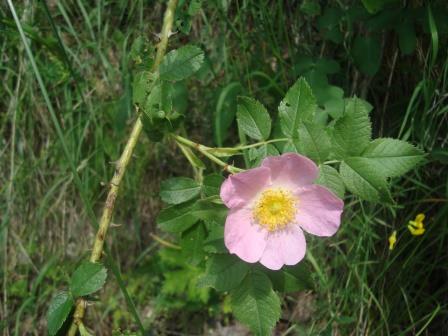
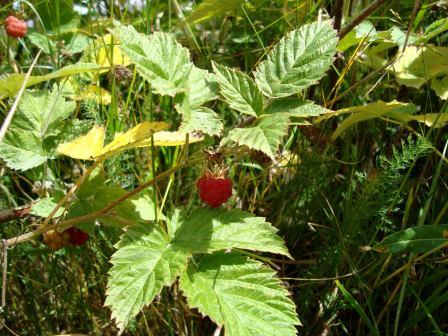
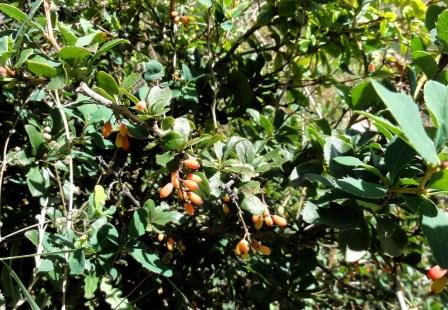
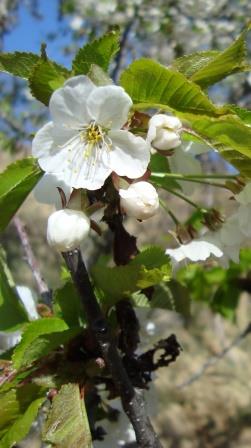
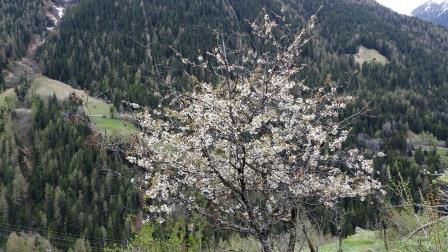
Here, in addition to bringing sheep and cattle, people used to till the soil. Can you spy the wild cherry (Prunus avium) down the slope and the stone wall that used to delineate a vegetable garden? In fact, since men have abandoned these areas, the forest has gradually reclaimed the meadow which gets more moisture and more shade as a result. Among other shrubs, barberry (Berberis vulgaris) has established itself; from its prick-ly branches hang racemes of yellow flowers which will produce edible red berries come September. You may also recognize some wild roses (Rosa sp), raspberries (Rubus idaeus), and Alpine currants (Ribes alpinum).
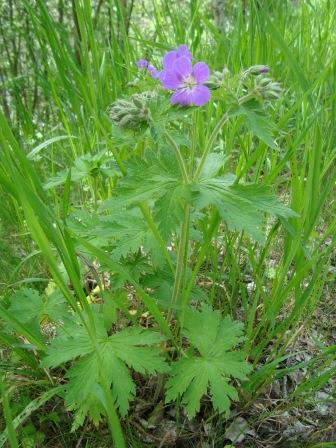
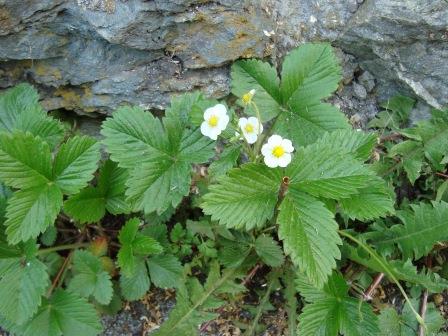
A number of edge associated herbaceus species are also to be found. You can most certainly spot a few strawberries (Fragaria vesca) and male ferns (Dryopteris filix-mas) growing on rocks, or even wood cranesbills, also called woodland geraniums (Geranium sylvaticum).
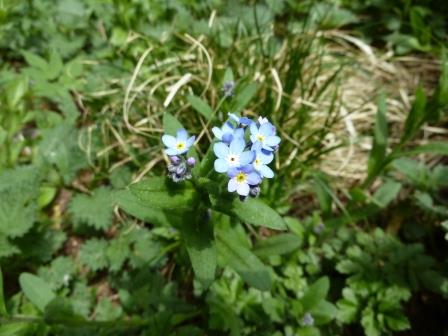
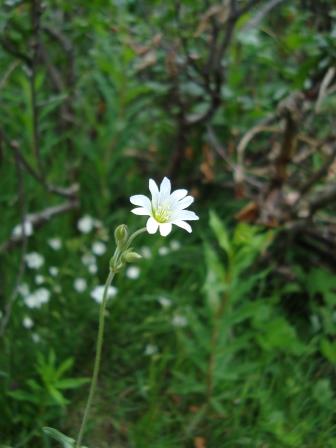
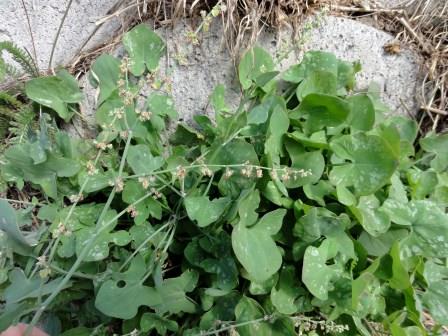
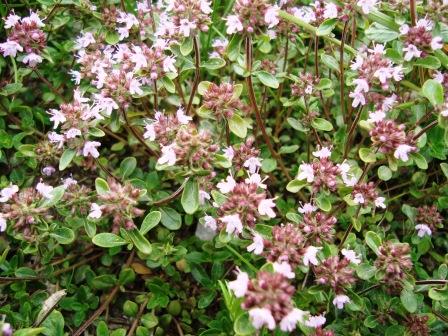
Still, the forest cannot expand everywhere. Can you see this rock pile? Plants that require a lot of humus cannot grow on this type of surface but those that are tolerant of dry conditions (xerophile) will survive. They are often aromatic plants such as oregano (Origanum vulgare) or Breckland thyme aka mother of thyme (Thymus serpyllum). You may also see common mouse-ear chickweed (Cer-astium fontanum), forming a mantle of small white flowers with notched petals, or forget me-not (Myosotis sp) whose striking five pet-al blue flower is not easily forgotten. These siliceous rocks are the natural habitat of nettles (Urtica dioica), which grow in all nitrogen enriched areas, as well as sorrel (Rumex scutatus), with its shield shaped leaves.
What will this station look like thirty years from now? Eventually, shrubs will be replaced by forest and, in shaded areas, xerophile spe-cies are likely to be replaced by plants that are better adapted to the prevailing ambient moisture.